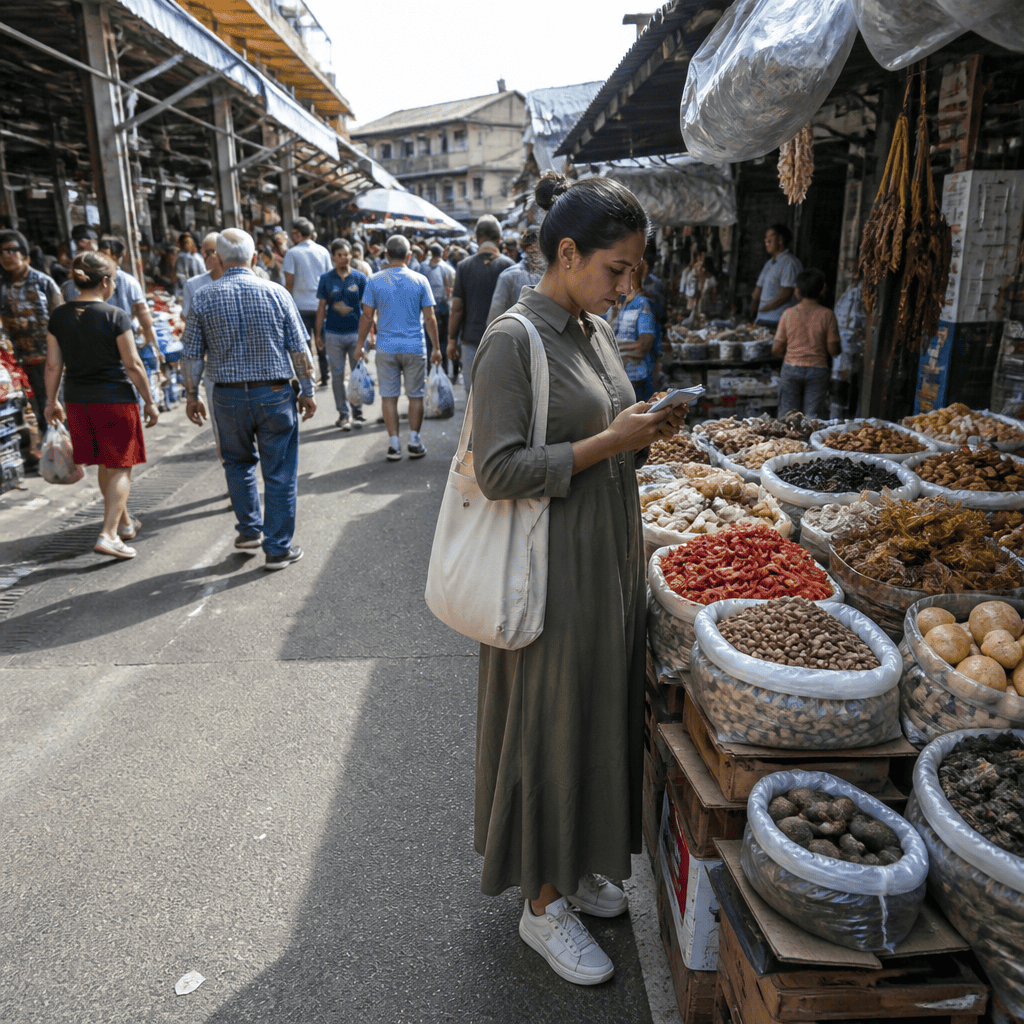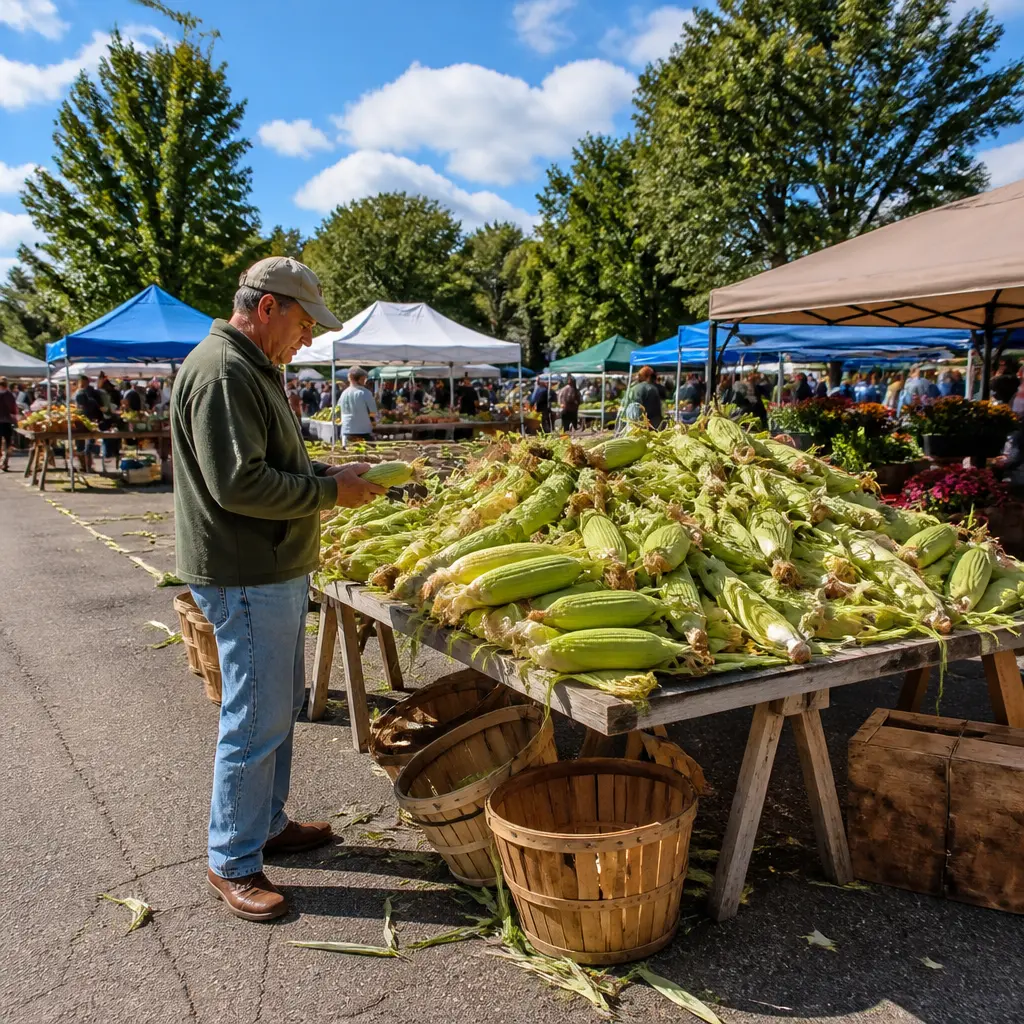
Local food system connectivity—the invisible network connecting farms, markets, institutions, logistics providers, and households—is the set of relationships and exchanges that move food, money, information, and trust within a defined region. This network explains why a farmers market is only one visible point in a much larger system: regional food hubs aggregate products, distributors coordinate transportation, schools and hospitals create dependable demand, and public agencies support infrastructure and standards. Its importance is measurable. The U.S. Department of Agriculture’s 2022 Census of Agriculture reported approximately $17.5 billion in food sales made directly to consumers, retailers, and institutions, demonstrating the economic scale of channels that can connect producers with nearby buyers.
Connect: Local Food System Connectivity
Local food system connectivity is a system attribute rather than a single organization or facility. It describes how effectively participants in a regional food economy are linked through physical infrastructure, commercial agreements, information exchange, and shared governance. The USDA defines a local food system as a set of activities and relationships associated with producing, processing, distributing, consuming, and disposing of food within a limited geographic area. Connectivity adds a practical question to that definition: can those activities work together reliably, affordably, and inclusively?
The attribute includes several related forms, or hyponyms: supply-chain connectivity links producers to buyers; logistics connectivity links products to places; market connectivity links supply with demand; institutional connectivity links farms with schools, hospitals, and public agencies; and social connectivity links food businesses with residents and community organizations. A region may have many farms but weak connectivity if products cannot be aggregated, refrigerated, financed, or sold consistently.
The USDA Economic Research Service has described local food markets as involving direct-to-consumer sales, direct sales to institutions and retailers, and intermediated channels such as food hubs and regional distributors. These channels are important because most farms cannot individually manage harvesting, grading, packaging, cold storage, delivery, invoicing, and compliance for dozens of buyers. The invisible network performs that coordination in the background.
Production connectivity: farms linked to complementary supply
Production connectivity is the relationship among farms, growers, processors, input suppliers, and farm-support organizations that allows a region to offer a consistent product mix. One farm may specialize in leafy greens, another in meat, and another in grains or fruit. When their production calendars and sales arrangements are coordinated, buyers can source a broader range of food without negotiating separately with every producer.
This category includes producer cooperatives, shared-use kitchens, agricultural extension services, seed networks, and contract-processing arrangements. It also includes less visible capabilities such as crop planning and common food-safety procedures. The USDA’s Census of Agriculture provides the baseline data for understanding this productive capacity, while the USDA National Agricultural Statistics Service tracks farm numbers, commodities, sales, and regional production patterns.
Aggregation connectivity: food hubs and collection points
Aggregation connectivity is the ability to collect products from multiple producers, combine them into marketable volumes, and maintain quality as products move to buyers. A food hub is commonly understood by the USDA as a centrally located facility or organization that actively manages the aggregation and distribution of source-identified food products from local and regional producers.
Food hubs solve a scale problem. A school district may need hundreds of pounds of produce each week, while each nearby farm may harvest only a portion of that amount. The hub can consolidate orders, standardize packaging, coordinate invoices, and provide cold storage. The USDA’s 2015 National Food Hub Survey identified hundreds of operating food hubs across the country and found that many were expanding their producer base and buyer relationships, although transportation, working capital, and year-round supply remained persistent challenges.
The hub may be a nonprofit, cooperative, private company, municipal project, or a department within a larger distributor. Its physical warehouse is visible, but its scheduling software, purchasing contracts, producer onboarding, and customer-service systems are often the most consequential parts of the network.
Distribution connectivity: cold chains, routes, and regional logistics
Distribution connectivity is the movement of food through transportation, storage, refrigeration, loading, and delivery systems. It determines whether local food can arrive at the right place, in the right condition, at a competitive cost. Shorter geographic distance does not automatically mean lower environmental impact or lower prices; an inefficient delivery route with partially filled vehicles can be less efficient than a consolidated regional route.
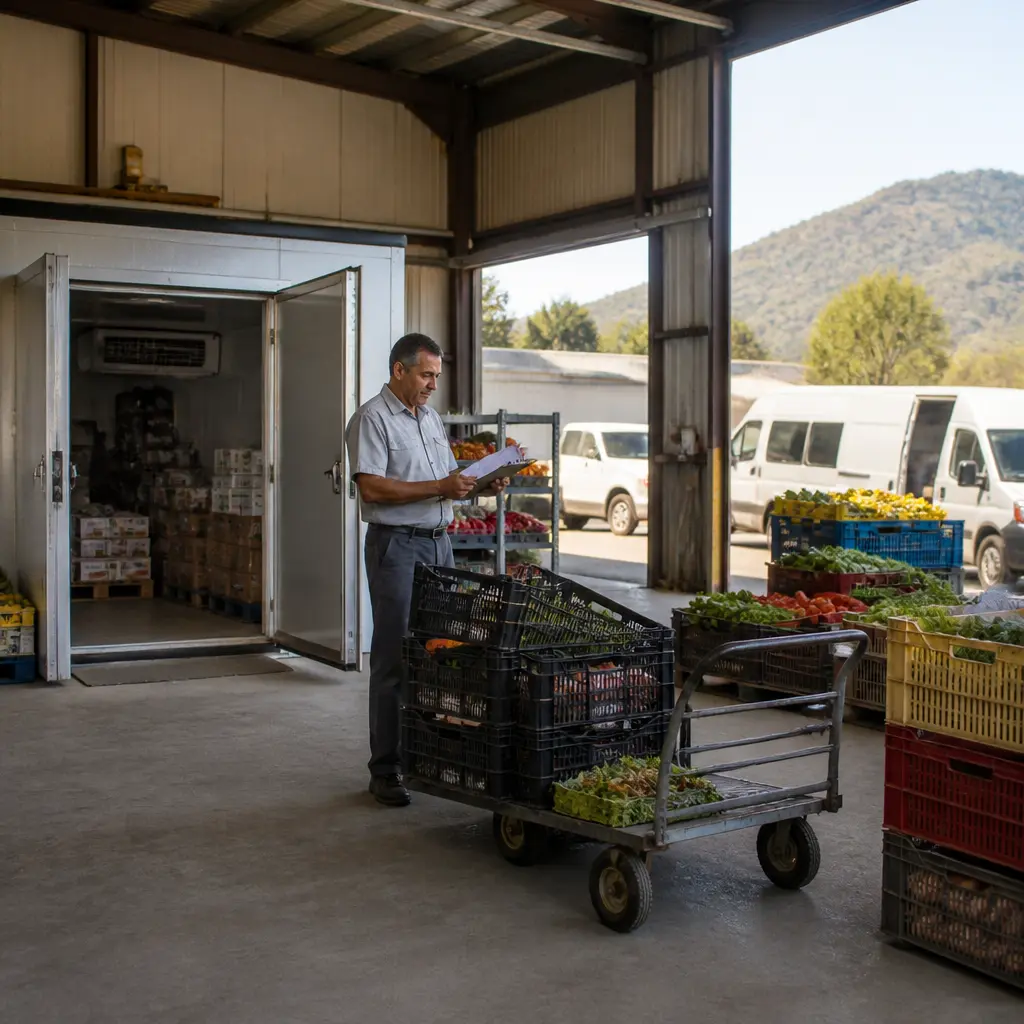
Key infrastructure includes refrigerated trucks, aggregation warehouses, farmers market loading areas, processing facilities, inventory systems, and delivery docks. The U.S. Department of Transportation and the USDA both identify freight access and rural infrastructure as important constraints for agricultural businesses. For perishable products, the network must also protect temperature and quality. In practice, a local food system is only as resilient as its weakest cold-storage, transportation, or processing link.
A useful diagram for this topic would show a farm-to-market network rather than a straight line: several farms would feed a food hub; the hub would connect to retailers, restaurants, schools, hospitals, and community food programs; and information and payments would travel in both directions. Such a diagram makes clear that local food is a network of nodes and relationships, not simply a product labeled “local.”
Coordinate: Local Food System Market Access
Market access is the capacity of producers to reach buyers who offer adequate volume, price, payment reliability, and reasonable transaction costs. In a connected local food system, market access is created through multiple channels rather than through farmers markets alone. These channels include community-supported agriculture programs, farm stands, online ordering, restaurants, independent grocers, regional wholesalers, schools, hospitals, and government-supported nutrition programs.
Direct-to-consumer channels
Direct-to-consumer channels allow a farm to sell straight to households through a farm stand, market, subscription box, or online order. They can provide higher producer margins and direct customer feedback, but they also require labor for marketing, retail service, payment processing, and delivery. According to the USDA’s 2022 Census of Agriculture, direct sales to consumers represented approximately $3.3 billion in U.S. agricultural sales, confirming that these channels are economically significant even though they represent only one part of the broader local food economy.
Institutional and retail channels
Institutional channels connect farms and food businesses with schools, colleges, hospitals, correctional facilities, and public agencies. These buyers can create stable demand, but they often require formal bids, insurance, food-safety documentation, standardized packaging, and dependable delivery schedules. Retailers and restaurants impose similar requirements while also expecting consistent quality and rapid communication.
The 2022 Census of Agriculture’s approximately $14.2 billion in direct sales to institutions and retailers illustrates the scale of these intermediated markets. Together with direct-to-consumer sales, the figures show that local and regional food connections extend well beyond the visible storefront or market stall.
Strengthen: Local Food System Resilience
Resilience is the capacity of a food network to absorb disruption, adapt to changing conditions, and continue providing food and income. Local sourcing can support resilience by diversifying suppliers and shortening some distribution pathways, but localism alone is not a guarantee. A region may still depend on distant sources for fuel, fertilizer, seeds, packaging, machinery, animal feed, or specialized processing.
The pandemic as a network stress test
The COVID-19 pandemic exposed the difference between centralized efficiency and network flexibility. In 2020, restaurant closures disrupted wholesale markets while grocery demand increased. Some farms lost institutional or restaurant customers, while community-supported agriculture programs, online ordering platforms, and local delivery networks expanded. The USDA Economic Research Service documented substantial shifts in food purchasing and marketing during the pandemic, showing that relationships and digital infrastructure could help some local businesses redirect products quickly.
The lesson was not that every region should replace national supply chains. Rather, it showed the value of having multiple routes to market, transparent communication, reserve capacity, and buyers willing to adjust specifications. A resilient network combines local, regional, and national connections according to the product and the risk.
Equity, affordability, and community governance
Equitable connectivity means that the benefits of local food systems reach producers, workers, and consumers across income levels and communities. Local food can be expensive when production is labor-intensive or distribution volumes are small, so affordability requires deliberate policies and business models. Examples include nutrition incentives, mobile markets, subsidized community-supported agriculture shares, universal school meals, cooperative ownership, and grants for minority- and family-owned food businesses.
The Centers for Disease Control and Prevention identifies access to nutritious food as a social determinant of health, while the USDA’s nutrition programs provide mechanisms for connecting low-income households with farmers markets and participating retailers. These programs make the invisible network more inclusive by linking public benefits, payment technology, producers, and community organizations.
Apply: Building a More Visible Local Food Network
Communities can strengthen local food system connectivity by mapping producers, processors, warehouses, buyers, transportation providers, and food-access programs. The objective is to identify missing links rather than merely count farms or markets. A regional assessment should ask who aggregates small orders, where surplus is stored, which facilities can process food, how producers are paid, and whether public institutions are purchasing from local suppliers.
- Publish a regional supplier and buyer directory that includes production seasons, volumes, certifications, delivery capacity, and purchasing requirements.
- Invest in shared cold storage, processing facilities, loading areas, and route coordination.
- Use schools, hospitals, and public agencies as anchor buyers with predictable contracts.
- Support cooperatives and food hubs that reduce transaction costs for small and midsize farms.
- Track outcomes such as producer revenue, food miles, delivery reliability, worker conditions, food waste, household affordability, and participation by historically underserved businesses.
For further analysis, a simple network scorecard can measure the number of active buyer-producer relationships, the share of products aggregated locally, average delivery distance, cold-storage capacity, percentage of invoices paid on time, and the proportion of residents able to access affordable local food. These indicators reveal whether a local food system is merely visible or genuinely connected.
Local food system connectivity turns scattered farms and markets into a functioning regional economy. Production networks create supply, food hubs aggregate it, logistics systems move it, markets generate demand, and public institutions can make access more equitable. The USDA’s direct-sales data show that these relationships already represent billions of dollars in economic activity. The next step is to make the network easier to see, measure, and improve so that local food systems become more resilient, inclusive, and dependable.
Sources: U.S. Department of Agriculture, 2022 Census of Agriculture, https://www.nass.usda.gov/AgCensus/; U.S. Department of Agriculture Economic Research Service, Local Food Systems: Concepts, Impacts, and Issues, https://www.ers.usda.gov/publications/pub-details/?pubid=46384; U.S. Department of Agriculture, Food Hubs: Building Stronger Infrastructure for Small and Mid-Sized Producers, https://www.ams.usda.gov/services/local-regional/food-hubs; U.S. Department of Agriculture, National Food Hub Survey Results, https://www.ams.usda.gov/services/local-regional/food-hubs; U.S. Department of Agriculture Economic Research Service, COVID-19 and the U.S. Food System, https://www.ers.usda.gov/covid-19/; Centers for Disease Control and Prevention, Social Determinants of Health, https://www.cdc.gov/about/priorities/why-is-addressing-social-determinants-of-health-important.html.