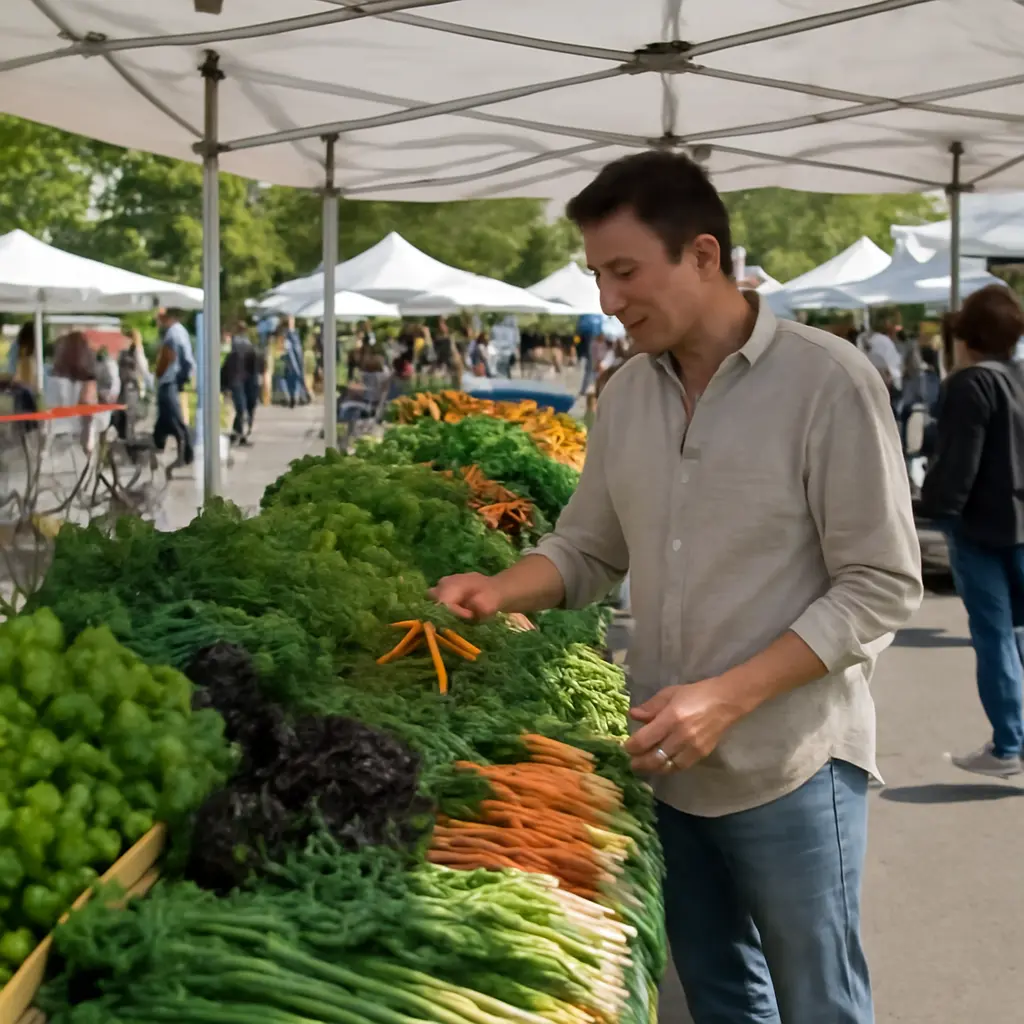
Farmers markets and grocery stores both sell fresh produce, but they differ in how food is sourced, when it is harvested, what shoppers can learn about its origin, and how prices and selection are shaped. A farmers market is generally a direct-to-consumer venue where growers or other vendors sell food, while a grocery store usually combines products from many suppliers through a distribution network. Those differences can affect freshness, seasonal choice, traceability, convenience, and cost—but neither venue guarantees that produce is local, organic, or more nutritious. The U.S. Department of Agriculture (USDA) counted 8,771 farmers markets in its 2019 directory, a measure of their reach rather than a current census; comparing markets and stores by sourcing, handling, price, and shopper needs gives a more practical picture.
How Farmers Market and Grocery Store Produce Differ by Sourcing
“Farmers market” and “grocery store” describe retail channels, not standardized grades of freshness or nutrition. USDA’s Agricultural Marketing Service describes farmers markets as places where farmers sell agricultural products directly to consumers, though market rules and vendor arrangements vary. Grocery stores typically buy through wholesalers, distributors, cooperatives, or direct supplier contracts. A market may include resellers as well as growers, and a supermarket may stock produce from nearby farms; asking vendors or checking labels is more reliable than assuming the channel tells the whole story.
Farmers market sourcing and direct sales
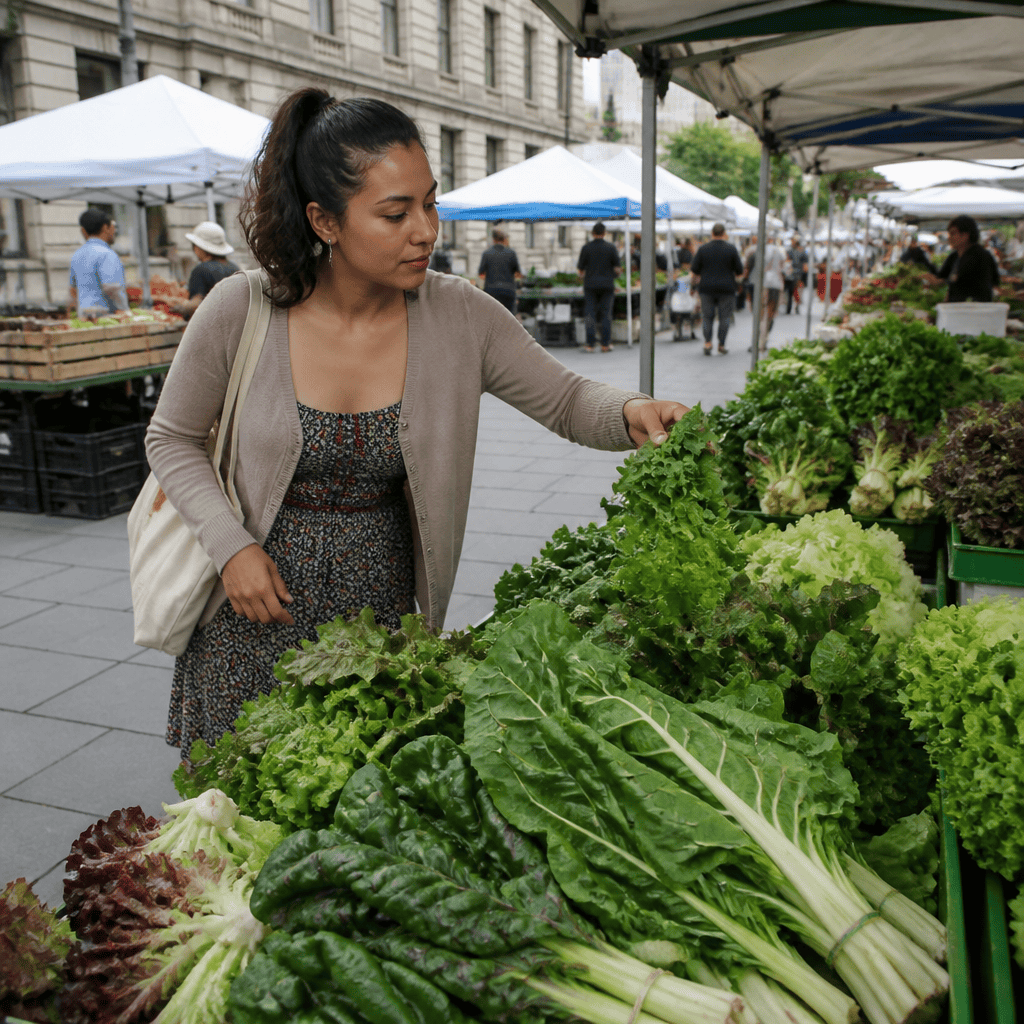
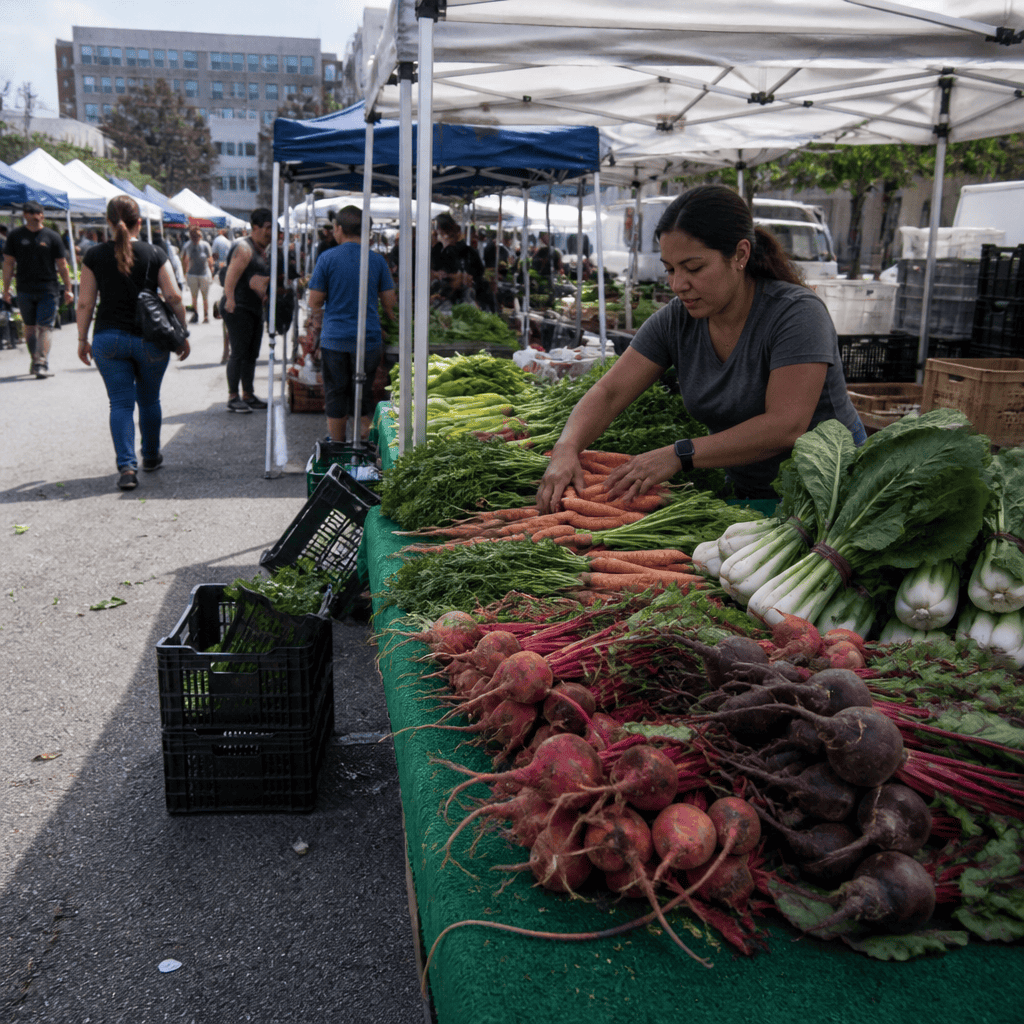
At a grower-operated farmers market stall, produce may travel from a farm to a nearby selling point with fewer commercial handoffs. That can make it easier to ask who grew an item, where it was harvested, and how it was produced. However, “local” has no single federal distance definition for all foods, and market policies differ. Some vendors sell goods they did not grow, so shoppers who want farm-direct produce can ask whether the seller is the producer and where the farm is located.
Grocery-store sourcing and distribution
A grocery store’s produce section is designed to offer a dependable selection across seasons. Retailers may source from regional farms when crops are in season and from farther-away suppliers at other times. Produce can pass through packing, cooling, storage, and transportation before reaching the shelf. These steps support broad availability and consistent supply, but the number of steps alone does not determine quality: crop variety, harvest maturity, temperature management, and time in transit also matter.
How Harvest Timing and Freshness Differ
Freshness is a product’s condition after harvest, not a guarantee attached to a retail venue. Harvest-to-sale time can matter because fruits and vegetables continue to respire and may lose moisture, texture, or some nutrients during storage. Yet a well-cooled shipment can preserve quality, while produce displayed outdoors in heat can deteriorate quickly. The USDA’s FoodKeeper guidance emphasizes that appropriate storage conditions and handling help maintain quality and safety.
Harvest-to-market time
Some farmers-market produce is picked close to the selling day, particularly when the grower is selling a local seasonal crop. That can provide crisp greens, ripe tomatoes, or freshly harvested roots, but it is not universal: products may be stored, and vendors may source from multiple farms. Grocery produce also varies. A store may receive recently harvested regional vegetables, while another item has been transported or stored for longer. Ask about harvest timing when it matters, and judge condition by firmness, aroma, bruising, and visible wilting.
Cold-chain handling and food safety
The “cold chain” is the sequence of temperature-controlled handling used to protect perishable foods from harvest through transport and retail. Large distributors and grocery retailers commonly use refrigeration systems, while farmers-market conditions vary by product, weather, equipment, and local rules. Consumers should keep perishable produce cool after purchase, separate it from raw meat during transport, and wash it under clean running water before eating or cutting. The U.S. Food and Drug Administration advises against washing produce with soap, detergent, or commercial produce washes.
How Seasonality and Selection Differ
Farmers markets often make local growing seasons visible: the mix changes as crops come into and leave harvest. Grocery stores generally provide a broader year-round selection by combining growing regions, imports, storage crops, and greenhouse production. The USDA’s Seasonal Produce Guide can help shoppers identify typical U.S. harvest periods, but exact availability depends on climate and region. A farmers market is therefore useful for discovering what is in season nearby, while a grocery store is often more convenient for finding a particular item throughout the year.
Seasonal and regional variety
Seasonal market displays may feature varieties rarely stocked by a large chain, such as unusual tomatoes, local apples, or specialty greens. That can support culinary discovery and give shoppers a direct way to learn how crops are grown. Selection is still limited by the region’s climate, the farm’s crop plan, and the length of the season. Grocery stores may carry a wider range of familiar produce at once, although their selection can differ by neighborhood, retailer, and time of year.
Year-round availability and convenience
Supermarkets are generally open more days and hours than weekly or seasonal markets, and shoppers can combine produce purchases with other household needs. A wider supply network helps keep common items available when local crops are out of season. The trade-off is that shoppers may have less direct contact with the grower and may need to consult labels or retailer information to identify origin. A practical approach is to use markets for seasonal discovery and stores for convenience or items not locally available.
How Price, Value, and Access Differ
There is no universal rule that farmers-market produce costs more or less than grocery produce. Prices reflect crop, season, growing method, local competition, packaging, labor, and whether products are conventional or certified organic. Comparing the same type and quantity is essential: a market bunch, a packaged grocery item, and a bulk-priced product may not be equivalent. The USDA’s Economic Research Service notes that food access depends on factors including income, transportation, and proximity to retailers, so convenience and affordability are part of the comparison—not just shelf price.
Price comparisons and value
Farmers-market prices may be competitive for peak-season crops, while grocery stores may offer discounts, promotions, or lower prices on high-volume staples. Direct sales can also reflect the costs of small-scale production and selling. Value includes more than the price tag: freshness, flavor, quantity, food waste, and the ability to buy only what is needed all matter. To compare fairly, note the price per pound or per item, inspect quality, and consider how quickly the produce will be used.
Payment options and food access
Access varies by location and market. Some farmers markets accept Supplemental Nutrition Assistance Program (SNAP) benefits through electronic benefit transfer, and USDA’s Gus Schumacher Nutrition Incentive Program supports projects that increase fruit and vegetable purchases among people with limited incomes. Participation is not universal, so shoppers should check locally. Grocery stores may offer broader hours and neighborhood coverage, while markets can provide a direct connection to local producers. Transportation, operating schedules, and accepted payment methods can determine which option is practical.
How Nutrition, Organic Claims, and Traceability Compare
The retail venue alone does not establish a produce item’s nutritional value or production method. Nutrient content varies with crop variety, growing conditions, maturity, storage, and cooking. The Centers for Disease Control and Prevention recommends eating a variety of fruits and vegetables as part of a healthy dietary pattern; choosing produce a household can afford and enjoy is more useful than assuming one shopping channel is inherently healthier. Labels and direct questions can clarify specific claims.
Nutrition and freshness claims
A freshly harvested item may have appealing texture and flavor, but “farmers market” is not a nutritional certification. Likewise, grocery produce is not automatically less nutritious because it has traveled farther. Some nutrients can decline during storage, but the degree varies by nutrient and food, and proper refrigeration can slow quality loss. The strongest everyday nutrition strategy is to eat a range of fruits and vegetables regularly, whether they come from a market, a supermarket, or both.
Organic certification and production methods
Organic is a regulated production and labeling claim, not a synonym for local, small-scale, or pesticide-free. USDA organic standards require certified operations to follow specified production and handling rules, with limited exemptions for some small producers. A farmers-market vendor may use organic practices without being certified, but should not present an uncertified product as “USDA Organic.” Grocery stores also sell both certified-organic and conventional produce. Shoppers seeking a particular production method should ask the grower or check the package label.
Origin and traceability
Traceability means being able to identify a food’s source and follow its movement through the supply chain. A grower selling directly can often explain a crop’s farm and harvest practices in person, while packaged grocery produce may identify a country or region of origin. Neither channel provides identical information for every item. For a useful comparison, ask for the farm name, growing location, harvest period, and whether the seller grew the product or bought it from another supplier.
How to Choose Between a Farmers Market and Grocery Store
The better choice depends on what a shopper values for a particular purchase. Farmers markets can be especially useful for seasonal local produce, direct questions, and specialty varieties. Grocery stores often offer longer hours, broader year-round availability, and one-stop shopping. Many households benefit from combining them rather than treating them as competing options.
- Choose a farmers market when you want to explore seasonal crops, talk with a grower, or look for products harvested nearby.
- Choose a grocery store when you need predictable availability, extended hours, or a wide selection in one trip.
- Compare unit prices and produce condition instead of relying on assumptions about which channel is cheaper or fresher.
- Ask vendors about farm origin and growing practices; check grocery labels and retailer information for the same details.
- Plan around storage and use. Buy quantities you can keep safely and eat before quality declines.
Conclusion: Farmers Market and Grocery Store Produce Serve Different Needs
Farmers markets and grocery stores differ most in sourcing relationships, seasonal availability, convenience, and opportunities to learn about a product’s origin. Direct market sales may make grower conversations and local harvests more visible; grocery distribution supports broad selection and dependable access across seasons. Neither channel guarantees better nutrition, lower prices, or superior freshness. Compare the produce itself, ask how it was grown and handled, and consider cost, access, and household needs. Visit a local market or review a store’s sourcing information, then choose the mix that helps you enjoy a varied supply of fruits and vegetables.
Sources: U.S. Department of Agriculture, Agricultural Marketing Service, Farmers Market Directory, https://www.ams.usda.gov/local-food-directories/farmersmarkets; U.S. Department of Agriculture, National Farmers Market Managers Survey 2019, https://www.ams.usda.gov/services/local-regional/farmers-markets-and-local-food-marketing; U.S. Department of Agriculture, Seasonal Produce Guide, https://snaped.fns.usda.gov/resources/nutrition-education-materials/seasonal-produce-guide; U.S. Department of Agriculture, Economic Research Service, Food Access Research Atlas, https://www.ers.usda.gov/data-products/food-access-research-atlas/; U.S. Department of Agriculture, National Organic Program, https://www.ams.usda.gov/about-ams/programs-offices/national-organic-program; U.S. Department of Agriculture, Gus Schumacher Nutrition Incentive Program, https://www.nifa.usda.gov/grants/programs/hunger-food-security-programs/gus-schumacher-nutrition-incentive-program; U.S. Food and Drug Administration, Selecting and Serving Produce Safely, https://www.fda.gov/consumers/consumer-updates/selecting-and-serving-produce-safely; Centers for Disease Control and Prevention, Fruit and Vegetable Consumption, https://www.cdc.gov/nutrition/php/data-research/fruit-vegetable-consumption.html; U.S. Department of Agriculture, FoodKeeper App, https://www.foodsafety.gov/keep-food-safe/foodkeeper-app