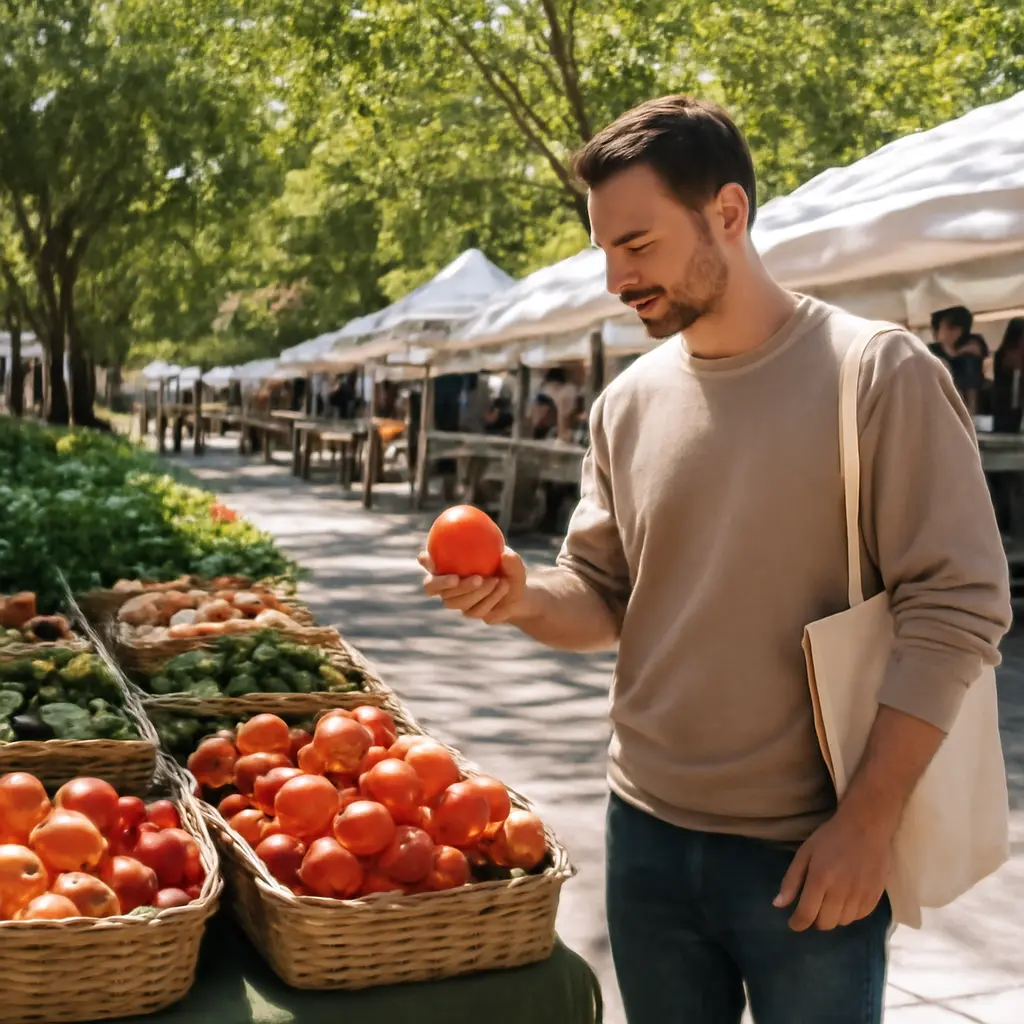
Fresh produce at a farmers market is food sold directly by farmers or other local vendors, often with information about its growing place and season. To shop well, check what is in season, inspect produce gently for freshness, ask vendors how to store and use unfamiliar items, and keep food-safety basics in mind. These habits can help you choose flavorful produce, reduce avoidable waste, and support local growers. The USDA’s 2022 Census of Agriculture counted 116,617 farmers markets in the United States, underscoring how widely shoppers can encounter these direct-sales venues.
Choosing Fresh Produce at a Farmers Market
The USDA defines a farmers market as a recurring gathering of farmers selling agricultural products directly to consumers at a common location. Markets differ in size, product mix, and vendor rules, so the best approach is to treat each stall as a chance to learn about the crop as well as buy it. Freshness is not a single appearance standard: ripeness, variety, intended use, and storage all affect whether a particular item is a good choice.
Seasonality is a practical starting point. USDA seasonal-produce guides and state extension services show that availability varies by region and growing conditions; a crop that is abundant in one area may be scarce elsewhere. Buying what is plentiful can make it easier to compare quality and prices, while asking vendors about harvest timing can clarify how soon an item should be eaten.
Shop by season and intended use
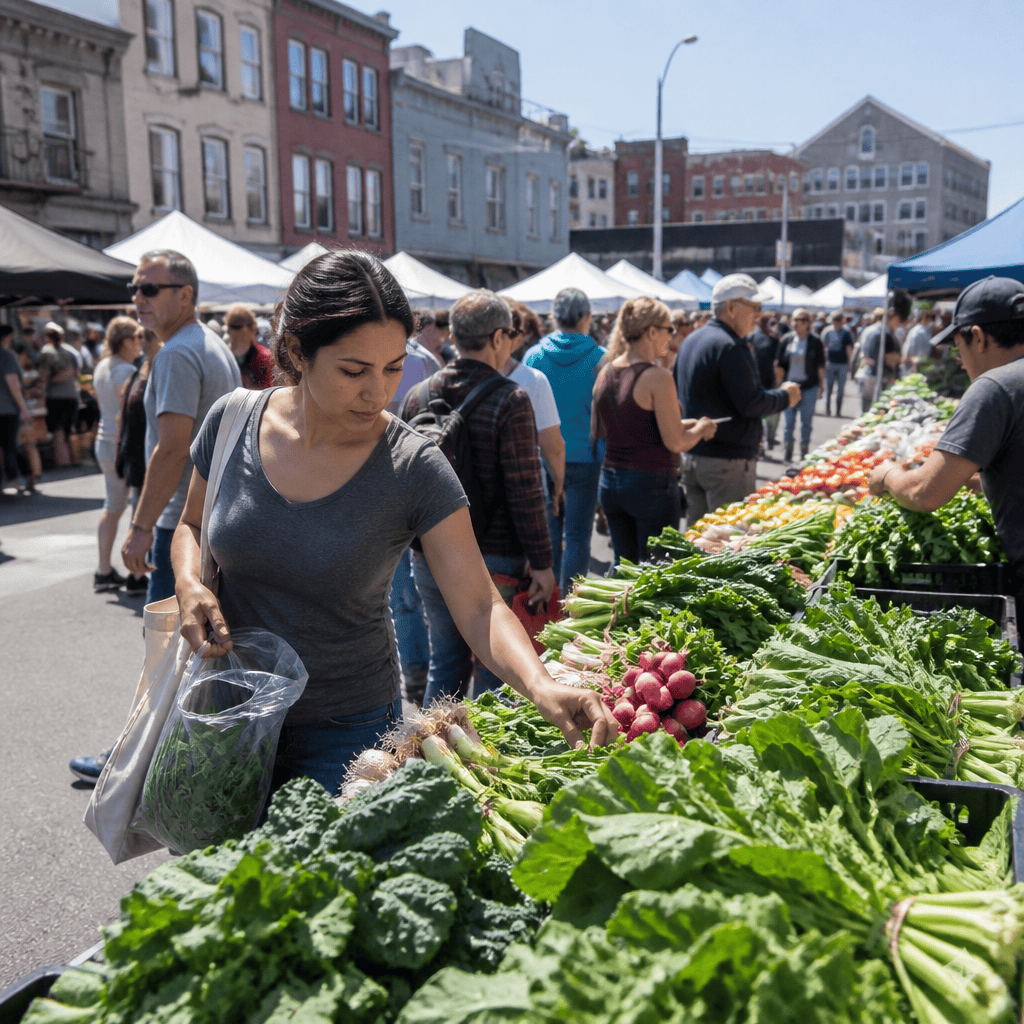
Seasonal shopping means choosing crops that are being harvested locally at that time, rather than assuming every fruit or vegetable should be available year-round. Ask, “What is especially good this week?” and “When was this picked?” Then match ripeness to your plans: choose ready-to-eat fruit for today, or firmer fruit if you need a few days before serving. For cooking, ask which varieties hold their shape, roast well, or work best raw.
A simple planning method is to buy a few familiar staples first, then add one unfamiliar seasonal item. That limits the risk of food waste while giving you a reason to ask for preparation tips. A market’s weekly selection can change with weather and harvest conditions, so a vendor’s current advice is often more useful than a generic calendar.
Inspect produce for quality
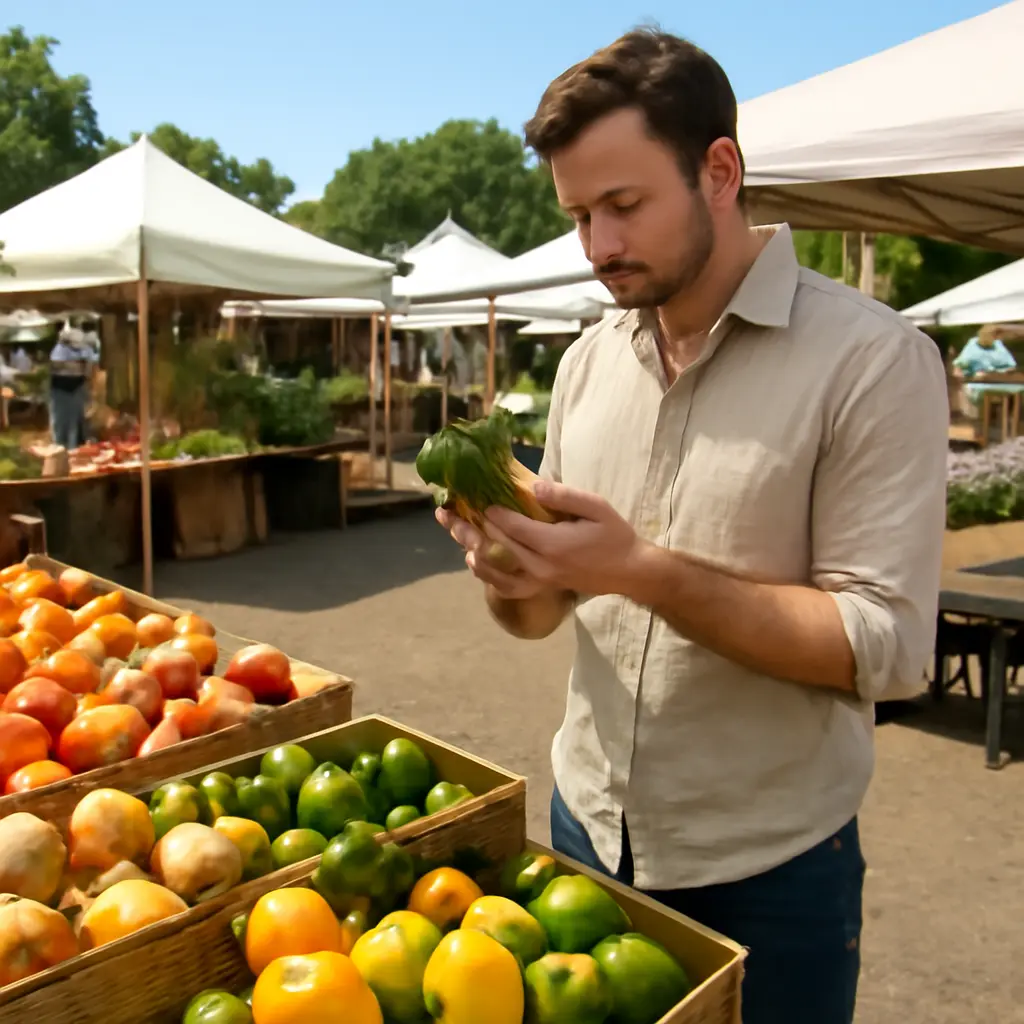
Quality checks should be specific to the crop. Look for color and firmness typical of the variety, intact skins, and fresh-looking leaves or stems where relevant. Avoid items with extensive mold, leaking liquid, deep cuts, or soft, sunken areas. But do not reject produce solely for an unusual shape: appearance varies naturally, and cosmetic differences do not by themselves show that food is unsafe or less nutritious.
Handle items gently and ask before sampling or picking up delicate produce. The U.S. Food and Drug Administration advises consumers to separate produce from raw meat, poultry, and seafood during shopping and transport. At home, rinse produce under running water before eating or preparing it; soap and household detergents are not recommended for washing fruits and vegetables.
Evaluating Farmers Market Vendors and Products
A vendor’s product information helps shoppers understand origin, growing practices, and how to handle a purchase. “Local,” “organic,” and “in season” describe different things: local refers broadly to geographic proximity, organic is a regulated production label when used in USDA-certified claims, and seasonal describes when a crop is typically harvested. Asking clear questions can prevent these terms from being treated as interchangeable.
Ask about origin and growing practices
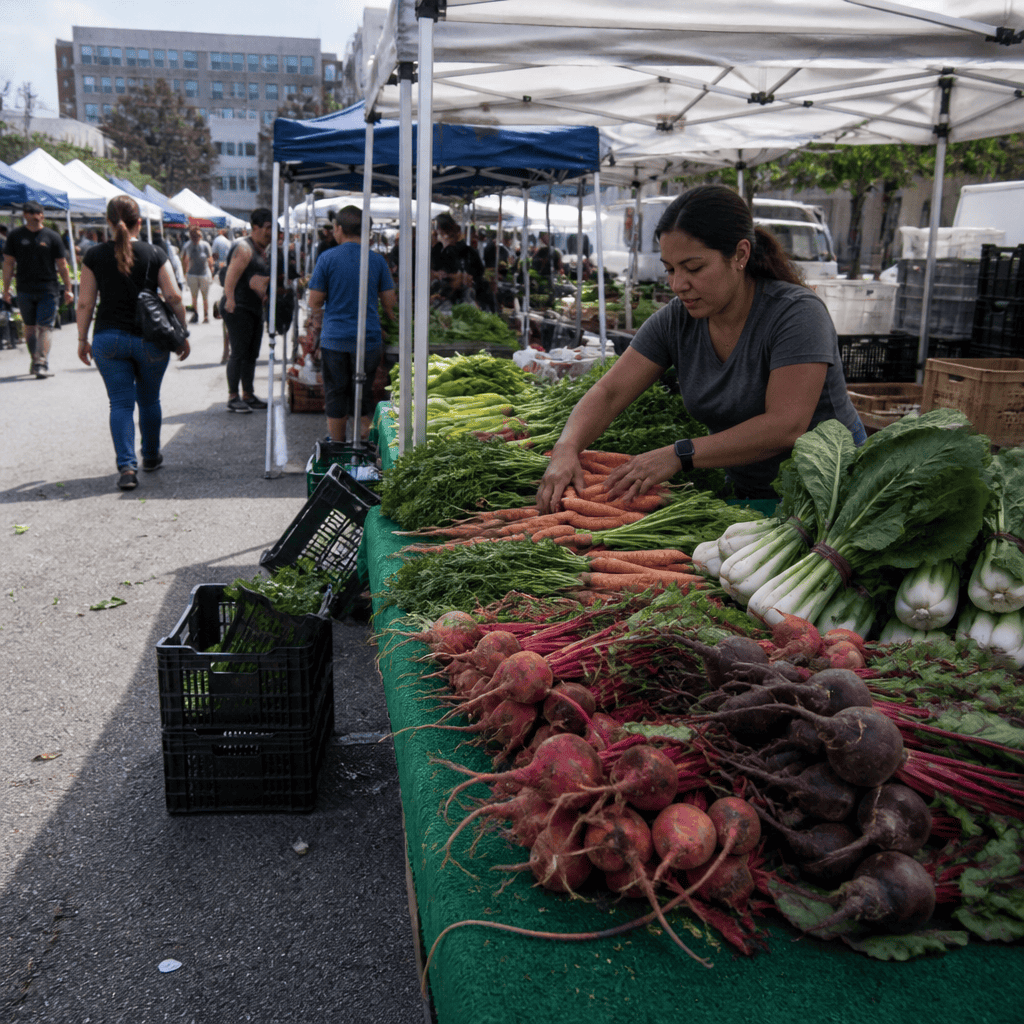
Ask who grew the produce, where it was grown, and whether the seller also offers items sourced from other farms. Market rules vary, and some markets require vendors to grow what they sell while others permit additional products. If organic production matters to you, ask whether the item is certified; USDA organic labeling is governed by federal standards, while a vendor’s description of particular practices is not the same as certification.
A useful real-world example is the USDA Farmers Market in Washington, D.C., which brings regional producers and customers together during its market season. At markets of this kind, shoppers can ask vendors directly about farm location, harvest, and handling—details that a package label may not provide. The answer can also help you distinguish a grower’s own crop from a product brought in through another supplier.
Compare value, not just price
Value includes edible yield, quality, convenience, and how much you can use before the food spoils. Compare unit prices when possible, and consider whether a larger bunch or box is worthwhile for your household. Ask whether the vendor offers smaller quantities or a mixed selection. Near closing time, some sellers may discount remaining products, but availability and policies differ by market.
To avoid waste, plan a few meals before shopping and leave room for one or two seasonal discoveries. Buy delicate greens and ripe berries in quantities you can use soon; sturdier vegetables may keep longer when stored properly. The USDA’s FoodKeeper resource provides storage guidance for many foods, though actual shelf life depends on freshness at purchase and home conditions.
Storing and Using Farmers Market Produce
Good shopping continues after checkout. Keep produce cool during transport, especially in hot weather, and refrigerate items that require chilling as soon as practical. Store fruits and vegetables according to their needs rather than assuming they all belong in the refrigerator; temperature and moisture preferences differ across crops.
Store produce to preserve freshness
Separate produce from raw animal foods in shopping bags and in the refrigerator. Follow vendor advice for unusual varieties, and consult the USDA FoodKeeper guidance for common storage questions. Some produce keeps better dry and unwashed until use, while other items benefit from prompt refrigeration. Remove damaged pieces when appropriate, since decay can affect neighboring produce.
For leafy greens, ask whether the variety is best kept wrapped or in a container; for tomatoes, ask about ripeness and whether they should finish ripening at room temperature. These are practical examples, not universal rules—variety, maturity, and the time between harvest and purchase all matter.
Wash and prepare safely
The FDA recommends washing produce under running water before preparing or eating it, including produce with skins that will be peeled. Scrub firm items with a clean produce brush when appropriate, and remove bruised or damaged areas. Washing does not make spoiled or moldy produce safe, so discard items showing significant decay.
Keep cutting boards, utensils, and hands clean, and prevent contact between ready-to-eat produce and raw meat or seafood. These everyday precautions apply whether food comes from a farmers market, grocery store, or home garden.
Conclusion: Make Farmers Market Shopping a Practical Habit
Shopping for fresh produce at a farmers market works best when you combine seasonal awareness, careful inspection, informed questions, sensible value comparisons, and safe storage. Ask vendors about harvest and origin, choose quantities you can use, and follow food-safety guidance at home. These steps can make market visits more rewarding while helping shoppers connect with regional food producers. Before your next visit, check the market’s schedule, make a flexible meal plan, and ask a grower what is tasting best that week.
Sources: U.S. Department of Agriculture, 2022 Census of Agriculture, https://www.nass.usda.gov/Publications/AgCensus/2022/; U.S. Department of Agriculture, Farmers Market Directory and Farmers Market Information, https://www.ams.usda.gov/local-food-directories/farmersmarkets; U.S. Department of Agriculture, National Organic Program, https://www.ams.usda.gov/about-ams/programs-offices/national-organic-program; U.S. Food and Drug Administration, Selecting and Serving Produce Safely, https://www.fda.gov/consumers/consumer-updates/selecting-and-serving-produce-safely; U.S. Department of Agriculture, FoodKeeper App, https://www.foodsafety.gov/keep-food-safe/foodkeeper-app; USDA Farmers Market, https://www.usda.gov/our-agency/about-usda/usda-farmers-market